Dear WHS Members,
Greetings from Newport! I hope you are all well and enjoying the fall weather. We have just wrapped up a fabulous trip to Mount Vernon and are excited about this week’s adventure in Newport.
Thank you to all of you who attended our last meeting. It was a real joy to hear Cooper Shattuck discuss memories of his grandfather Roland Cooper, “The Wily Fox from Wilcox.” It is important to recognize and share his positive impact in Wilcox County. Thank you, Garland, for arranging such an interesting slate of speakers this year!
At the meeting, we announced our 2025 Tour of Home’s Guest Speakers, the Viscount and Viscountess of Hinchingbrooke, Luke and Julie Montagu. We are thrilled they have agreed to join us this year! Their visit will generate a lot of excitement and interest in the Tour. With her 150,000 followers on social media and our Tour’s notoriety, it will sell out this year.
You can see their full bios in this newsletter. They are both actively involved in managing and preserving their family home, Mapperton in England. In addition, Julie starred in the Smithsonian Channel’s “An American Aristocrat’s Guide to Great Estates” and currently hosts the YouTube series American Viscountess, sharing insights into the UK’s historic houses.
As I discussed at the meeting, the Tour is our only fund-raising event each year. Please support it by helping spread the word in our community and beyond. By working together, we will ensure it sells out.
You can use the ticket order form in this newsletter to order your tickets. Member ticket order forms must be received no later than Sunday, November 17th. Tickets will go on sale to the General Public on December 1.
Speaking of tickets, please make sure to put the WHS Christmas Concert Saturday night, December 21, at 7:00 pm, on your calendar. The Harvest Arts Quartet will be performing ‘Behold You King,’ for us. A reception will follow at the Female Institute. Tickets will be available at the November Meeting and are already on sale online at harvestartsllc.com. Simply click on the Tour link to order. Let’s ensure they have a large crowd by promoting this special concert.
What a year! From a visit by English Aristocrats and outstanding musical ensembles to great guest speakers and the restoration of our Female Institute, we are making a big difference in Wilcox County and beyond. I hope to see you all at our next meeting on Sunday, November 17, at 2:00 pm in the Female Institute.
Thank you for your continued support of the WHS!
Sincerely,
Lance Britt, WHS President
WELCOME to new members
from Alabama: Camden – Rev. Brett and Laura Frey, Point Clear – Charles and Lila Bailey, Mobile – Cart Blackwell, Monroeville – Haden Tirey and Sam Kyser, Birmingham – Ann Heitz and Tuscaloosa – Cooper and Lisa Shattuck.
2025 TOUR OF HOMES – Camden area
March 21-22, 2025

We are thrilled to announce that the Viscount and Viscountess of Hinchingbrooke, Luke and Julie Montagu, will be the Guest Speakers at our Tour of Homes, March 21 – 22, 2025. The Montagues will share stories of England’s great houses, including their own home, Mapperton, considered the finest Manor House in England. Join the Wilcox Historical Society in March as we welcome English Aristocracy to Alabama once again! Tickets are limited and will be available to the general public on December 1 on eventbrite.com. Tickets are available now to WHS Members and order forms must be returned by November 17, 2024.
Julie Montagu (Viscountess Hinchingbrooke) is a historian and presenter known for bringing British heritage to life. She starred in “An American Aristocrat’s Guide to Great Estates” on the Smithsonian Channel and hosts the YouTube series American Viscountess, sharing insights into the UK’s historic houses. Julie holds a Master’s in Country House Studies and leads the Alberta Research Project, focused on American heiress Alberta Sturges Montagu, the 9th Countess of Sandwich. She also plays a key role in managing Mapperton House with her husband Luke.
Luke Montagu (Viscount Hinchingbrooke) is an entrepreneur who now spends most of his time managing his family’s country estate and historic house at Mapperton in West Dorset. After graduating from Columbia University in New York, Luke founded a series of technology, education, and media businesses. In 2003 he co-founded the Met Film School, which he led as CEO until 2009. Luke was chair of the trustees for the Dalai Lama Centre for Compassion from 2016-2022, a charity that develops programs supporting kindness in schools. He is currently chair of trustees of West Dorset Wilding, a charity that promotes rewilding and nature recovery. He also co-founded Living History Films with his wife Julie. Living History Films produces the successful YouTube channels Mapperton Live and American Viscountess, celebrating British country houses and estates.
WHS Meetings
ART IN WILCOX COUNTY – PAST AND PRESENT
On Sunday, September 22nd, WHS members and guests enjoyed a wonderful program by Cart Blackwell on Art in Wilcox County, Past and Present, celebrating over 180 years of cultural expression.
Few areas in Alabama possess the cultural heritage and present-day creative vitality of Wilcox County. Showcasing the expressions of the fine, decorative, applied, and literary arts, the presentation spotlighted works created in Wilcox County or collected by patrons of the same. From significant examples of mid-19th Century regional portraiture to locally made “folk art” furniture to photographs by internationally recognized artists to quilts by Gee’s Bend quilters, Art in Wilcox County demonstrated how one special place has not only reflected pervasive cultural currents but also created waves of its own.
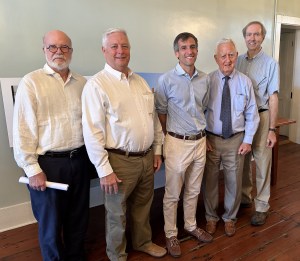
Names like William Harris, Dannie McWilliams, Carothers, Annie Pettway, Mattie Hollinger Jones,
Frances Benjamin Johnston, Marion Post Willcott, Betty Gaines Kennedy, Edith Morgan, Peter Jenkins, Mary Lee Simpson, and many, many more have all helped shape a unique cultural tapestry in Wilcox County that continues to evolve while honoring its past.
THE WILY FOX FROM WILCOX – THE LIFE OF ROLAND COOPER
We delved into the remarkable life of Roland Cooper—an influential figure in our local, county, and state politics. From serving two terms as mayor of Camden to five terms in the Senate, Cooper was a master of parliamentary procedure and a beloved leader, known as the “Wily Fox from Wilcox County.”
When he resigned from the Senate to become Probate Judge of Wilcox County, it was a continuation of his dedication to his community. Cooper’s legacy is a reminder of how one committed individual can impact the lives of many.
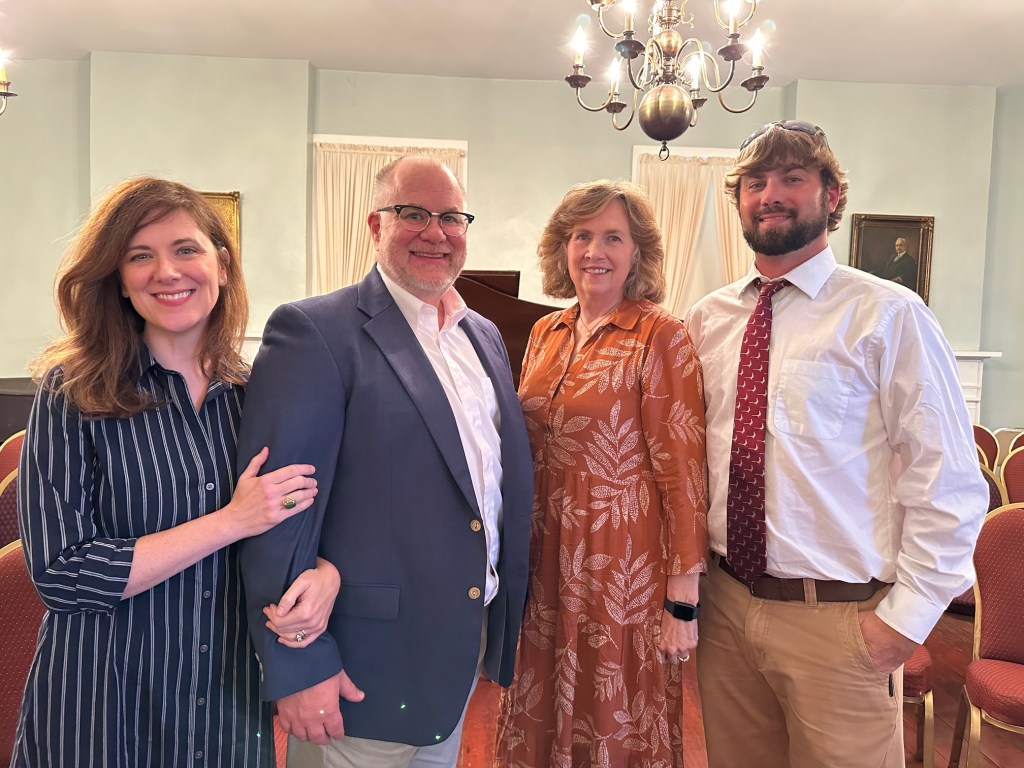
We welcomed guest speaker Roland Cooper Shattuck, a practicing attorney and playwright, who shared insights about his great-grandfather’s legacy at our meeting held on Sunday, October 13th.

Virginia Dell “Ginger” Lamkin Grimes April 16, 1933 – July 22, 2024, was born in Evergreen, Alabama. She lived most of her life in Wilcox County, Alabama, and attended first – sixth grades at Oak Hill School. She attended school in Greensboro for seventh and eighth grades while living with her Uncle John Edwin Jones Jr., Aunt Exa Lamkin Jones, and her family. She returned to McWilliams and attended high school at Moore Academy in Pine Apple where she graduated in 1951. At Moore Academy, she met her husband of almost 72 years – Harold “Hal” Watts Grimes Jr. They started dating when she was a ninth grader and he was a senior. They became engaged when she was a junior but did not marry until Hal graduated from Auburn University in 1952. They moved to Marion Junction in 1957. She made significant impacts in each community where she lived. Due to her nature to stay busy and be productive, she took on the job of driving a bus for the Marion Junction School. Her involvement with working with children continued for many years. About 1972 she began work at Perry Christian School in Marion, Alabama. At PCS she taught classes, oversaw the cafeteria, was the bookkeeper and office manager, and managed the concession stand at all home sports games. But her favorite role earned her the title of Mama Grimes. She loved all the students. She became the driver, nurse, doctor, confidante, and substitute mother for many students. She later worked at Gold Kist Grain Elevator in Browns, Alabama. From 1976 until her retirement in 1989 she managed the office for Gold Kist, where she was proud to be among the first clerical staff trained on a computer system for weighing and sorting farmers’ accounts. Her dedication did not stop there—she also took the time to train others on the new system, helping to modernize operations for the benefit of all. After retirement, she served on the Wilcox County Library Board, was instrumental in securing and restoring Moore Academy for the Moore Academy Alumni Association, and loved sharing Pine Apple as a member of Pine Apple Promotions. She was also the unofficial welcome committee chairman gifting new neighbors and visitors her famous banana nut bread. Virginia was well known for her cocker spaniels and bred dogs for over sixty years. Virginia was the daughter of Fred Taft Lamkin and Edna Earl Hamilton Lamkin of McWilliams, Alabama. Her paternal grandparents were John Allen Lamkin and Martha Williams Lamkin and her maternal grandparents were Howell Presley Hamilton and Eula Susannah Majors Hamilton; all of McWilliams. She is survived by her brother, Fred “Ted” Earl Lamkin Jones, and children Harold Watts Grimes III, William “Bill” Allen Grimes, and Martha Grimes Lampkin. She was preceded in death by her parents, brother Fred Allen Lamkin, and husband, Hal Grimes.
Nancy Miller Melton May 17, 1945 – August 7, 2024, was born in Ouachita Parish, City of Monroe, Louisiana. Her father was on active duty in Europe with the United States Army Air Corps, 8th Air Force, when she was born. Upon his discharge, he was reunited with his wife and saw his three-month-old daughter, Nancy, for the first time. They moved to Brewton, Alabama. Nancy attended public schools in Brewton and graduated from T.R. Miller High School. She attended Converse College and transferred to the University of Alabama where she graduated with a B.A. Degree and was a member of the Kappa Kappa Gamma sorority. In March of 1967, she married William Dudley Melton. In Evergreen she was a member of the Evergreen Study Club for 50 years, a member of the Evergreen-Conecuh County Public Library Board, and a member of the Board of Trustees of the University of Mobile. She was a longtime member of The Evergreen Baptist Church and served for many years on the Building and Grounds Committee of which she was a sustaining member. She was predeceased in death by her husband of 56 years, William Dudley Melton, her parents, Virginia Kersh Miller and John Richard Miller, Jr., and her brother, David Earl Miller. Her maternal grandparents were Mary Virginia Kersh and John Earl Kersh of Monroe, Louisiana. Her paternal grandparents were Lucille McGowin Miller and John Richard Miller, Sr. of Brewton. She is survived by her brother John Richard Miller, III, and sister, Jean Miller Stimpson, and children Nancy Dudley Melton Berry, and Richard Plowden Melton.

Celebrate Special Occasions with a Gift Membership!
Looking for the perfect gift for a birthday, anniversary, or Christmas? Consider a gift membership to the Wilcox Historical Society! Not only will you be giving a unique present, but you will also be helping us preserve and celebrate the rich history of Wilcox County.
A membership offers access to exclusive events, educational resources, and a deeper connection to our county’s heritage. It is a thoughtful way to honor a loved one while supporting our mission.
When you gift a membership, we will send a beautiful gift certificate directly to your friend or family, along with our latest newsletter. It is a great surprise that keeps on giving!
If you are interested in making a meaningful contribution to someone’s special day, please email us at wilcoxhistoricalsociety@gmail.com for more information.
Together, let’s celebrate the past and support the future of Wilcox County!
THINGS THAT GO BUMP IN THE NIGHT
A Sampling of American Ghosts

By W. Stuart Harris
Oliver Davis was born on a plantation near the community of Lower Peach Tree, in Wilcox County, Alabama. During the War Between the States, the young men of the area left their homes to join the Confederate Army, leaving only the old men and women and children to look after the planting and harvesting, the management of the slaves, and the handling of livestock. The young Davis child was given many chores to accomplish, but he cheerfully fell into the routine of a planter while his father and older brothers were away are war.
One night at the supper table Oliver’s mother informed him that they were running short of block salt and that he and Jeff, the faithful old family slave, would have to take the wagon down into Clarke County on the following morning to purchase the needed salt. Since it was quite a long distance, they would have to leave long before daylight in order to reach the salt works by noon and return home before dark. Oliver told the ancient Negro of tomorrow’s task and this mother prepared a large sack lunch for them to take along.
At three A.M. the next morning, Oliver and Jeff ate their breakfast and started on their way. Jeff, who had often made the journey, took the reins, while Oliver sat on the rear of the wagon bed, his feet dangling over the tailgate. Slowly the team pulled the conveyance down the dark, rough road.
They passed the Independence Church and cemetery and soon came to the “Old England Place,” a large abandoned plantation house silhouetted against the pale gray sky, with boarded-up windows and a sagging porch. The large unpainted dwelling had never been occupied in Oliver’s brief lifetime. Mr. England had been an early settler in the area and had owned several hundred acres of farmland and many slaves. He was said to have been a cruel master and had little to do with his neighbors. His death had occurred over a decade before Oliver was born, and he had left the property to a relative who only inhabited the house for a short time before moving to the nearby village of Sunny South. The fields were still worked but the house was used only for the storage of hay.
Jeff turned the wagon onto the Jackson Road, which ran by the side of the vacant house. The night was so dark that Oliver could hardly see the corn stalks which stood in the field behind the house, but he was able to distinguish a tall obelisk tombstone marking the final resting place of England, which stood surrounded by a rusty iron fence in the tall weeds beside the road.
Suddenly a man stepped out of the darkness at the side of the road and began following a few feet to the rear of the wagon. A frown marked an evil face and his eyes seemed to be empty sockets. The youngster was so scared that he almost lost his breath. He tried to speak, to shout, but no sound came from his trembling lips. And then the figure disappeared as suddenly as it had appeared.
Finally, the boy was able to scream out, “Jeff, Jeff! Who was that man who has been following us?”
The slave remained silent and Oliver realized that the Negro held his eyes tightly closed. He was not asleep but had shut his eyes and let the mules guide the wagon down this section of the road.
“Lawd, chile,” the old Negro finally answered, “I sho din’t look at him, but I knowed that he wuz there. Don’t you know, why dat was Massa England! He ain’t never liked nobody to pass through his place. Why, he always follows anybody dat drives along dis stretch to make sho hey din’t steal anything ob his.”
This excerpt from the self-published collection of ghost stories from 1970 was written by Dr. W. Stuart Harris (1933-2017) of Marion and shared by WHS member Dr. Valerie Pope Burnes, associate professor of history at The University of West Alabama and past president of the Alabama Historical Association. Dr. Harris taught at Judson College in Marion and was a well-known historian, author, and professional storyteller. He was the author of many books, including A Short History of Marion, Perry County, Alabama; Its Homes and Its Buildings, Things That Go Bump in the Night, Dead Towns of Alabama, Alabama Place Names, A History of Alabama; a Secondary Course, Perry County Heritage, Volume I and II and Haunted Southland Tales, co-written with Cara Swann. He also self-published over 100 volumes of Southern Historical Records and Steamboat Wrecks of Alabama.
Samuel Botsford Buckley
an American botanist, geologist, and naturalist
by WHS Editor Martha Grimes Lampkin
Brian R. Keener, PH.D. is the Director of the Cahaba Biodiversity Center and Professor of Biological Sciences as well as the Coordinator of the Alabama Plant Atlas and Curator of the UWA Herbarium at The University of West Alabama in Livingston. In April of this year, Dr. Keener spoke to Wilcox County’s Lieutenant Joseph M. Wilcox Daughters of the American Revolution Chapter meeting. In his presentation, we learned about Alabama’s incredible biological diversity. One standout moment was the reference to Buckley and his intriguing connection to Wilcox County. It was a connection I had to know more about. With Dr. Keener’s help and the resources available online I was able to compile the following information about Dr. Samuel Botsford Buckley, an American botanist, geologist, and naturalist, and his connection to Wilcox County.
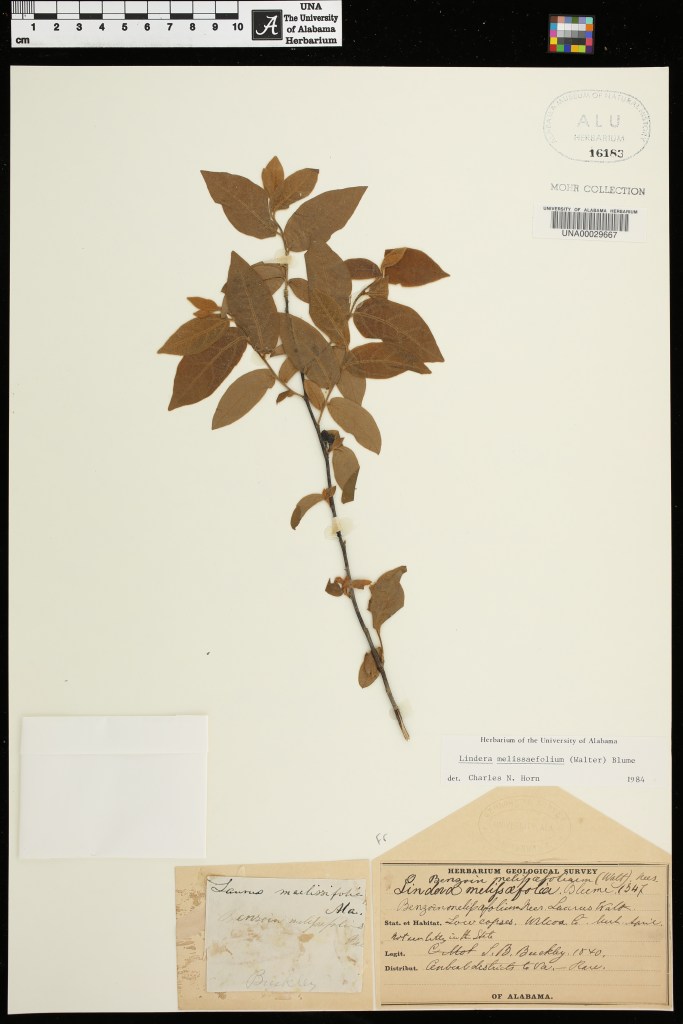
The oldest plant specimen still curated in an Alabama herbarium was collected by Samuel Botsford Buckley in Wilcox County in 1840. It is of the federally listed Lindera Melissifolia (commonly known as Pondberry, Southern Spicebush, Hairy Spicebush, or Jove’s Fruit) which was thought to be extirpated from Alabama until it was rediscovered in 2004 in a different county. Brian Keener continues, “… there are other Buckley specimens from Alabama in northern herbariums and perhaps slightly older ones by others.”
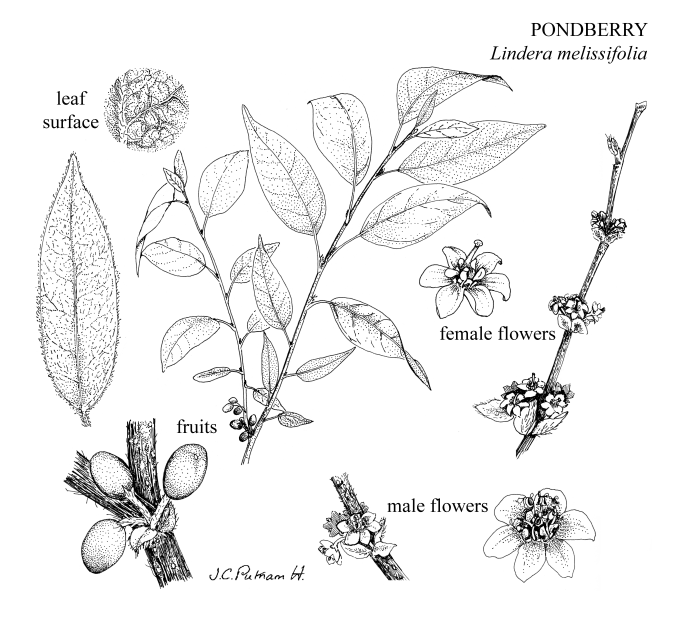
Pondberry is a native deciduous shrub in the Laurel family (Lauraceae). Pondberry was discovered by Samuel Buckley in Wilcox County in 1840 but has not been seen from that county since that time despite numerous searches. In 2004 it was discovered in Covington County. “Pondberry occurs in low woods, along the margins of cypress ponds, and in wet depressions on the Coastal Plain. It is a colonial shrub rarely more than 3 feet tall. The bark is brown or gray and smooth. Leaves are alternate, petiolate, elliptic to ovate in outline, pubescent on both surfaces, with ciliate margins. The leaves “droop” throughout the growing season and plants appear wilted. The leaves turn bright, clear yellow before falling in the autumn. The leaves are strongly aromatic when crushed with the odor of Sassafras. Flowers are produced in the later winter before the leaves. The flowers are produced in axillary clusters. Staminate and pistillate flowers are produced on different plants. Flowers lack petals and have bright yellow tepals. Staminate flowers have 2 whorls of tepals and 9-12 stamens. Pistillate flowers have one whorl of tepals and an inner whorl of nectar-producing scales. The fruit is a bright red ellipsoid drupe. Pondberry is listed as an S1 species in Alabama (typically 5 or fewer occurrences, very few remaining individuals, acres, or miles of stream, or some factor of its biology making it especially vulnerable in the state), and globally as a G2G3 species. G2 – Imperiled globally because of rarity (6 – 20 occurrences, or few remaining acres, or miles of stream) or very vulnerable to extinction throughout its range because of other factors. G3 – Imperiled globally because of rarity (6 – 20 occurrences, or few remaining acres, or miles of stream) or very vulnerable to extinction throughout its range because of other factors). It was listed as an Endangered Species by the U.S. Fish and Wildlife Service on July 31, 1986.”
Samuel Botsford Buckley (1809-1884) was born in Torrey, New York. He graduated from Wesleyan University in 1836. In 1837-38 he gathered botanical collections in Virginia and Illinois. In 1838 he joined Drs. Powell and Spillman in an excursion into Alabama, exploring caves and adding much to our knowledge of mineralogy and paleontology. “Buckley reached Alabama by the principal road of travel leading from the Ohio Valley to the Gulf. Passing over the detached spurs of the Cumberland Mountains in Madison County, on his journey to Alabama and pursuing his favorite occupation he discovered the interesting American Smoke Tree, before known only from a single locality in the Indian Territory near the borders of Arkansas.”
Arriving in central Alabama, he was offered the Principalship of Allenton Academy in Allenton, Wilcox County, Alabama, a position he held for two years – 1839-40. “In the prairie region, he discovered that fine tree of the white-oak group named by him Quercus durandii and in the hills, Thalictrum debile, besides a host of other interesting plants heretofore unknown from the Southern States.”
While in Alabama during leisure time and vacations, he made large collections in every department of natural history, many of which were sent to the New York Lyceum of Natural History (known now as The New York Academy of Sciences.)
In 1842 he discovered the bones of a species of Zeuglodon – a seventy or eighty-foot skeleton, with the assistance of Judge John G. Creagh of Clarke County, Alabama. Census reports indicate some of the Creagh families moved back and forth between Wilcox and Clarke County. Buckley writes, “Judge Creagh was among the first settlers of Alabama, and he often told me of the large number of bones which were on his and the adjoining plantations, when he first moved there, how they interfered with the tillage of the soil, and how vast numbers of them had been burned or otherwise destroyed; and he added that an old hunter who lived among the Indians prior to the settlement of that country by the whites, had often told him that he had seen several entire skeletons of this animal, lying upon the surface of the ground, upwards of a hundred feet in length.” As an American botanist, geologist, and naturalist, Buckley investigated the botany of the southern United States and discovered many new species of plants and mollusks. The plant genus Buckleya was named in his honor. Also known as Pirate Bush, “Buckleya was first discovered in western North Carolina by the English botanist Thomas Nuttall, who incorrectly assigned it to a genus in the olive family. In 1843, Buckley, a collector working for John Torrey, rediscovered the species. Torrey, a professor at Columbia College, properly identified and classified the species, and renamed the genus in Buckley’s honor.”
In 1843 Dr. Buckley discovered thirteen new species of shells on a collecting trip to Florida. He later worked on a farm in New York and a bookstore in Ohio until 1858 when he returned to Tennessee and North Carolina to do work in geology. In 1860-61 Buckley was assistant geologist and naturalist in the Texas Geological Survey. In 1871-72 he was agricultural and scientific editor of the Austin State Gazette. He received a Ph.D. degree from Waco University in 1872 and became State Geologist in 1874, a post he held until 1877. In the last years of his life, between 1878 and 1883, he made several collecting trips in northern Mexico. Buckley died in Austin in 1884.
Written by Dr. Charles Mohr about Buckley in the U.S. Department of Agriculture’s Division of Botany, the U.S. National Herbarium, Volume VI, Plant Life in Alabama issued July 31, 1901, was the following statement “Working without the advantage of a large botanical library he met with severe criticism; but many of his new species which at the time were not regarded as valid have now received their deserved recognition.”
Sources: http://floraofalabama.org, A History of Botany in Alabama, https://www.fs.usda.gov/wildflowers/plant-of-the-week/buckleya_distichophylla.shtml, The Gardener’s Monthly and Horticulturist; Vol 26 published in 1884, https://freepages.rootsweb.com/~kithandkin2000/genealogy/creaghfamily.htm, National Institutes of Health https://digirepo.nlm.nih.gov/ext/dw/101656944/PDF/101656944.pdf, Texas State Historical Association, https://www.tshaonline.org/handbook/entries/buckley-samuel-botsford, https://www.jstor.org/
Alabama State Society
The National Society Colonial Dames Seventeenth Century
Historical Marking of
Mount Moriah Fellowship Baptist Church
By WHS Member Mary Alice Beatty Carmichael
It was an honor for the Alabama Society Colonial Dames XVII Century to place a marker at the historic Mount Moriah Fellowship Baptist Church formed on May 2, 1828, nine years after Alabama was granted Statehood. This church is known as “The Church That Would Not Die” and straddles the line of Butler and Wilcox counties. The pulpit is in one county, and the pews are in another county. Descendants of these early people still have an annual Homecoming Celebration each year since Mount Moriah Fellowship Baptist Church was founded. This fellowship is 196 years old.
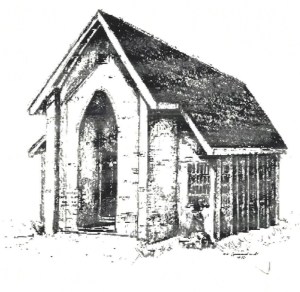
On October 17, 2012, the Mount Moriah Cemetery was placed on the Alabama Historic Cemetery Register by the Alabama Historical Commission. On October 13, 2024, the Alabama Society Colonel Dames XVII Century unveiled a beautiful plaque at the church in the wildwood, which is in two counties, four townships, and three ranges. “Come to the church in the wildwood; Oh, come to the church in the dale. No spot is so dear to my childhood as the little brick church in the dale.”
The plaque reads as follows:

Mt. Moriah Fellowship Baptist Church
Butler and Wilcox Counties, Alabama
Mt. Moriah Fellowship Baptist Church was formed May 2, 1828, nine years after Alabama Statehood. The Presbytery was composed of Thomas Trowel, Elias Brown, and George W. Nolen. The other founders, Kedar Hawthorn, Minister and his wife Martha, Leonard Scott, Deacon, and Lucinda Scott; Dabney Palmer, Clarissa Palmer, Joel Baggett, Jane Baggett; and Sawney “a colored man of D. Palmer” constituted the church on the general principals of the Baptist faith and order “finding the members orthodox in faith.” It became “The Little Church That Would Not Die.”
The exact location of the first church building is assumed to have been on this land near the line of Butler and Wilcox Counties.
A number of the earliest members arrived in this area during the days of the Mississippi Territory (1798-1818) and Alabama Territory (1817-1819.) The Mt. Moriah Cemetery was established on this land soon after the church was formed. Some of these earliest members are buried in currently unmarked graves, one of whom is Col. Richard Warren, a Veteran of the Revolutionary War. In this long-established holy ground are patriot heroes who have loved and served this nation throughout her history.
By 1847 the church had grown from nine to 360 souls, both white and black members. A new building was needed. It was constructed of wood with two doors at the front, one on the far right and the other on the far left. It was completed free from debt by the 1848 February Conference. It remained in use until the late 1940’s. Preaching was traditionally the first Sunday of the month.
After the Emancipation, with help from their former owners, the black members built their own church nearby. In May 1867 their church was completed and more than a dozen black families transferred their membership from Mt. Moriah Fellowship Baptist Church to begin their own church. Both blacks and whites have continued to this day to bury their loved ones in the hallowed ground of the venerable burial ground of the original cemetery.
In 1954 the last members gathered to see what could be done to restore the building. Among those on the committee were Mr. and Mrs. Charles J. Donald, Mr. and Mrs. Harold W. Grimes, Mr. and Mrs. Claude Luckie (the only members of the committee who were still enrolled in Fellowship Church), Mr. and Mrs. Richard Hager, Dr. and Mrs. Dan Donald, and others. All of them are listed on a bronze plaque in the sanctuary, along with those whose financial contributions made the rebuilding possible.
Restoration was not feasible. A new building was built. The grounds of the church were enlarged by gifts of land from four families whose lands cornered near the sanctuary. They were W.W. Kendrick and Dr. John L. and Grace (Donald) Carmichael who gave lands in Butler County and Richard and Clarita Hager and Bob Atkins who gave lands in Wilcox County. These gifts of land were situated in two counties, two ranges, two townships, and four sections.
The county line goes through the church with the pulpit in Wilcox County and the congregation in Butler County.
This third and current sanctuary was made of brick and completed in 1955 by descendants of the original members a decade after the last pastor retired. These descendants integrated as much of the old church as possible into the new. The former girders became exposed beams, the original pews continued as pews, the pump organ, (which before 1900 the youth of the church had provided), the sanctuary chairs, etc. were moved to the new building.
When the new chapel was built, an endowment was set up to maintain the grounds. The annual gifts and benevolences given by this little church have included over 50 scholarships, given over a number of years. In recent years the generous spirit of the congregation has donated to several evangelical and humanitarian organizations.
The annual worship service has had speakers that included Editors of the Alabama Baptist, College Presidents, and Chancellors, pastors including those who have been recipients of the church’s scholarships, missionaries, military chaplains, youth directors, and seminary students. Attendance at the annual service has been by descendants of the original members from nearby communities and from many states from coast-to-coast.
As a Missionary Baptist Church, it has been part of three different associations: 1828-1850, Bethlehem Baptist Association, 1850-1904 the Pine Barren Baptist Association and from 1904-1941 the Butler Baptist Association.
On October 12, 2012, the Mt. Moriah Cemetery was placed on the Alabama Historic Cemetery Register by the Alabama Historical Commission. The Mt Moriah Fellowship Baptist Church was honored in October 2024 by the Alabama Society Colonial Dames of the XVII Century as being noteworthy of recognition as a valuable historical site and honored the church with a plaque.
Marked by Alabama Society National Society Colonial Dames CVII Century 2024

RAISE THE BELL CAMPAIGN / WILCOX FEMALE INSTITUTE UPDATE
The topographical survey has been completed, and Dick Hudgens’s team is revising the plans to include a possible catering kitchen, the second-floor restoration, a new roof on the existing building, and other adjustments as needed. Once complete, Jennifer Mitchell of Stuart Construction, our construction consultant, will send it to her estimators to determine the cost of the updated project. Once we receive the updated cost analysis, we will advertise for bids and begin construction.
Little Bear Creek Church
Caledonia, Wilcox County
by WHS Editor Martha Grimes Lampkin
The cornerstone reads, “The Bear Creek Baptist Church erected by Rev. H. Cunningham 1888, rebuilt by Rev. I. H. McPherson, Pastor, W.C. Abram, Clerk 1945.”
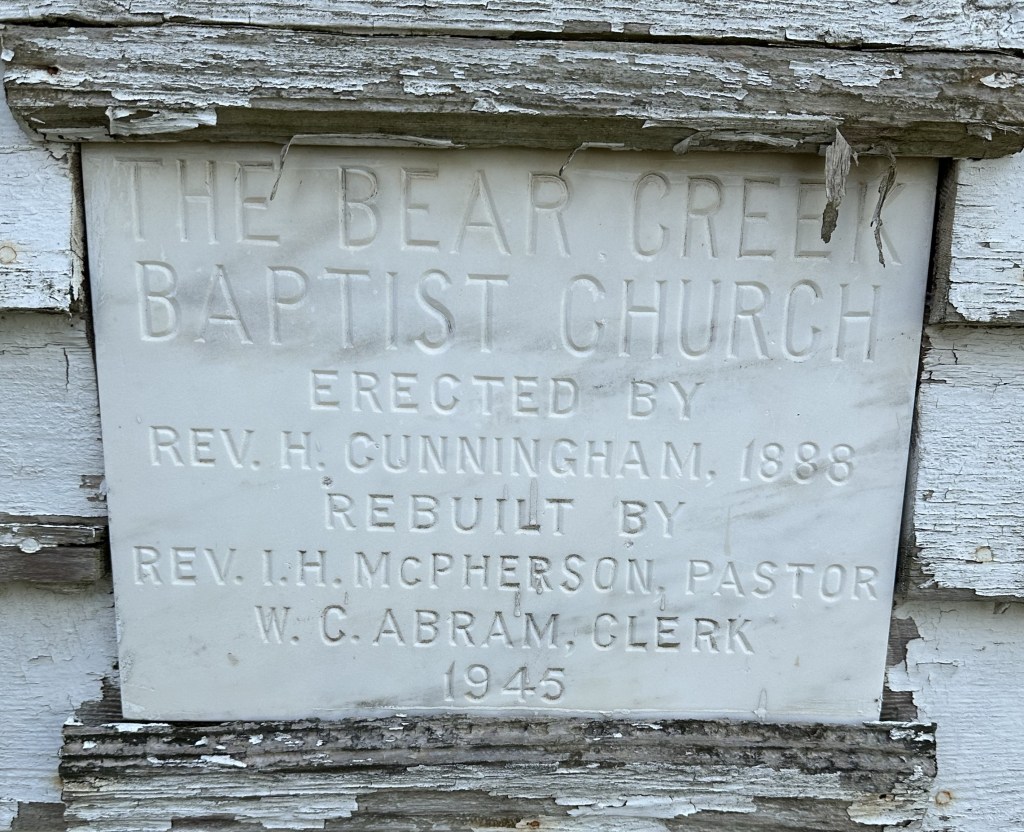
According to maps dating back to 1916, this African American church was called Little Bear Creek. It has more recently been referred to as Bear Creek AME Church.
The well-kept cemetery adjacent to the church is still in use today. The earliest marker is that of Mattie Lee Smith (18921925). Abrams, Dale, McCaster, McWilliams, Owens, Smith, and others are buried in this cemetery.
Little history of the church is known; a few details of the men listed on the cornerstone follow.
No information could be found for Rev. H. Cunnigham, who built the first church in 1888.
Rev. Isiah H. McPherson was born in May 1913 in Wilcox County. The 1940 census and WWII draft papers place him in Crichton, Mobile County. The 1950 census places him in Watson’s Crossing, Wilcox County, where he was a farmer and preacher. Rev. McPherson (1913-1983) and his wife, Annie Mae (1913-2005), are buried in Lawn Haven Memorial Gardens in Theodore, Mobile County, Alabama.
In Jacksonville, Florida, according to the Mobile Weekly Advocate, November 1943, “One of the most historic soul-saving Gospel Meetings conducted by the Revs. Tshaka McCarroll and Isiah McPherson, both of Mobile City, Ala., came to a glorious close last night, Sunday, November 7, at the Missionary African Universal Church.
Rev. Isiah McPherson, as the Principal Speaker each night, delivered himself so well that his messages carried such spiritual fervor as to arouse unusual religious demonstrations on the part of his hearers. One aged lady who still remembers her youthful days during slavery requested that the Rev. Isiah McPherson write for her the subject of every sermon of the week, as she wanted to carry it with her.”
According to the census, Mr. Walter Comer Abram (1893-1957) spent his entire life in the Fox Mill’s beat of Wilcox County. He worked as a saw millhand for Dale Lumber Company in Caledonia and as a farmer. He was the son of Dale Abram and Ella Stallworth.
If you have any history of this church, please let us know.
The Joshua Grace House in Old Allenton
By the late Frances Donald Dudley Grimes, past WHS President
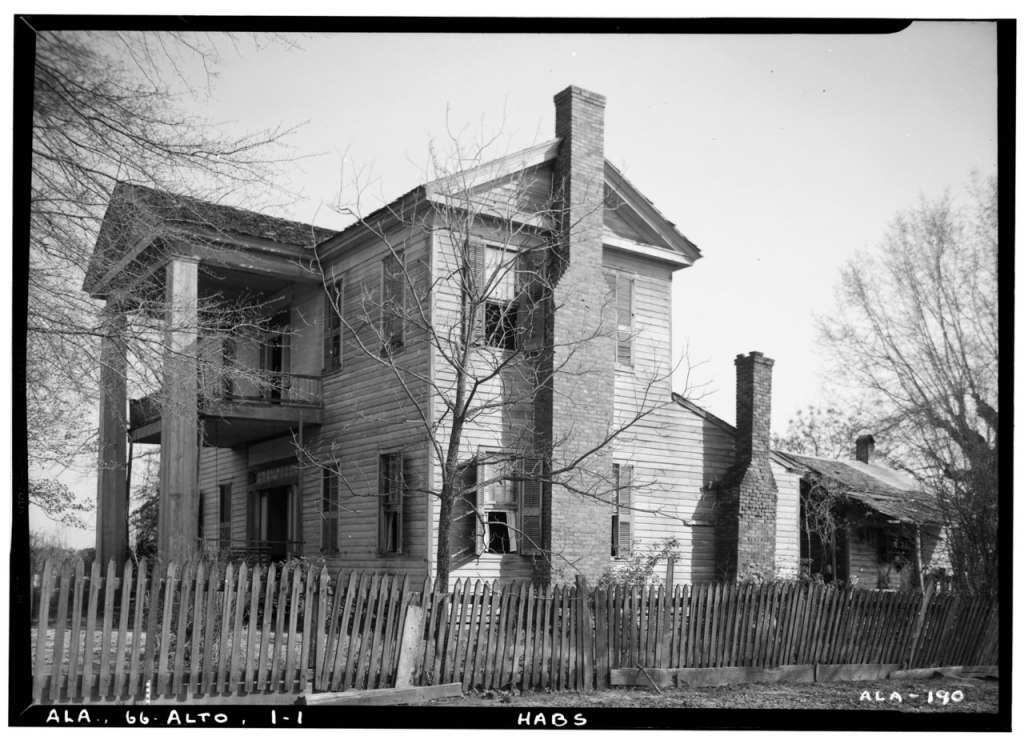
The beautiful antebellum house of Greek Revival architecture was built about 1840-50. It is situated on an elevated site overlooking the road leading to Pine Apple. It is two stories high, with wide verandas opening into spacious halls. Both rooms and halls were plastered and beautifully frescoed. The grounds were landscaped with bridal wreath and other southern shrubs.
Mr. John Patton Grace married Miss Nancy Jane “Nannie” Grace (his second cousin) from Beuna Vista, Monroe County, Alabama. Three daughters were born to this union: Mabel, who married Julius Harper; Mary, who married Irvin Chestnut; and Johnnie, who married M.D. Smith.
After Mr. Grace died in 1887, Mrs. Grace married John Francis Lee. They had two children: Will and Julia.
The house is now owned by Nathaniel “Nat” Chestnut, son of Irvin and Mary Chestnut. Nat has two brothers, Irvin and Reginald, and one sister, Grace Chestnut Grimsley of Canoe, Alabama.
My grandfather, William James Yeldell, and Mr. John Grace were close friends. When my mother was born on January 1, 1877, she was named Grace, a lovely tribute to a close friendship. (This short history of the Grace House and family was probably written in the 1960s. Mr. D. Moore now owns the house.)

A Grant from the
Alabama Historical Commission
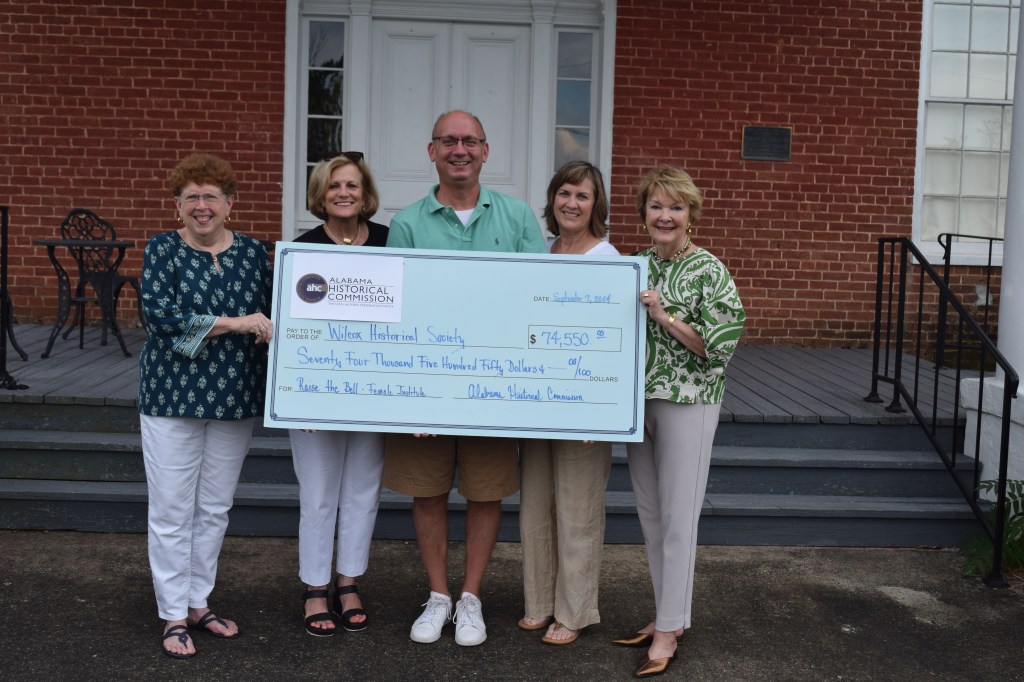
We received a $74,550 grant from the Alabama Historical Commission, designated to restore the second floor of the Wilcox Female Institute.
We would be remiss if we did not thank the Alabama Legislature and Governor Ivey for increasing this year’s appropriation to $4,300,000. Their generosity helped us and other projects in Wilcox County, too (the largest grants available were $75,000). Moore Academy in Pine Apple received $75,000, and Shiloh Methodist Church in Caledonia, as part of the Bear Creek Historical and Preservation Association, received $52,500. It was a BIG day for historic preservation in Wilcox County.
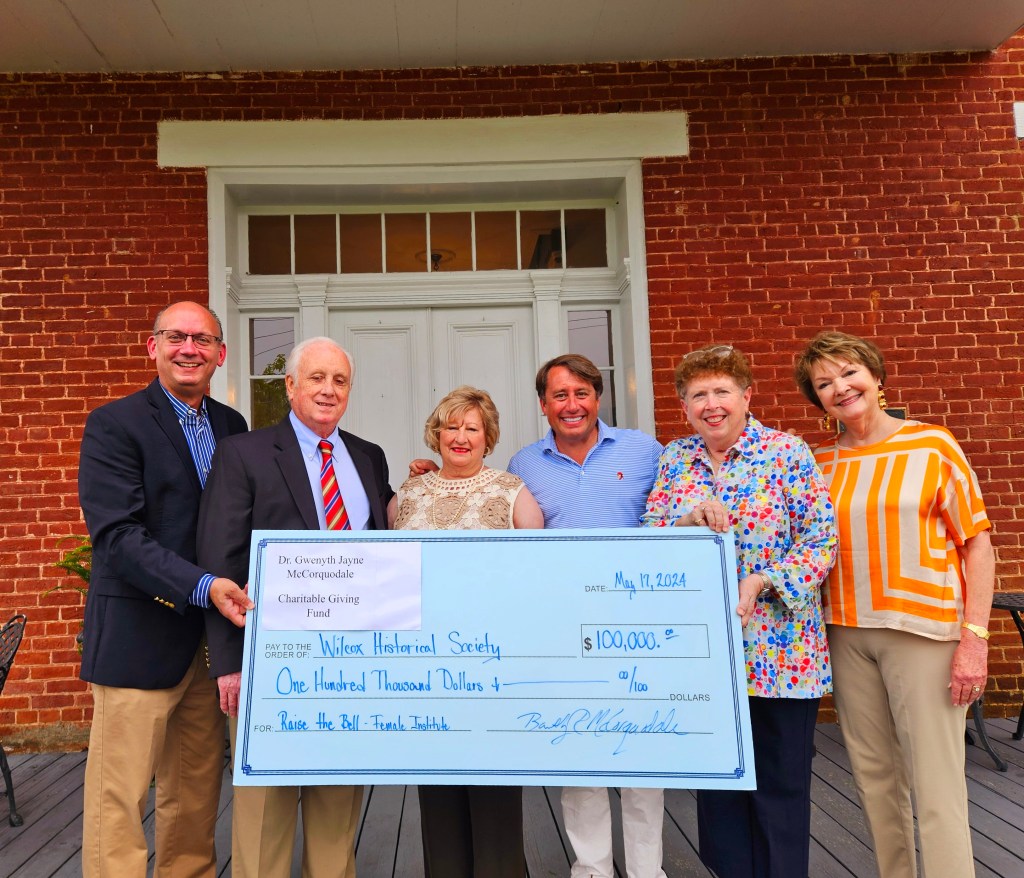
A Grant from the Gwenyth Jaye McCorquodale Trust
The Wilcox Historical Society received a $100,000 cash contribution from the Gwenyth Jaye McCorquodale Trust to help fund our “Raise the Bell” Campaign to restore the Wilcox Female Institute. This gift along with the funds we have already raised through our annual Tour of Homes will allow us to build a significant portion of the first phase of the project.
THANK YOU to Bart McCorquodale for making this gift possible. We are very appreciative of the McCorquodale Trust’s generosity and are thrilled to start this project!
Phase One of our Raise the Bell project to restore the WFI includes adding a portion of the two-story wing behind the current building. It will house bathrooms on both floors, a second staircase, an elevator, storage, and MORE!

We often receive genealogical and local history inquiries on the WHS Facebook page, Instagram page, and website. If you have any information to help with these inquiries, please let us know and we will be happy to pass it along or put you in contact with the interested party. Our email address is wilcoxhistoricalsociety@gmail.com or you can text or call Martha Lampkin at 334.296.1076. Here are a few inquiries received since our last newsletter:
I want more information about Joe Powell Primm, my great-grandfather. My grandparents and mother lived at White Columns. My great-grandmother’s last name was Starr. I have so many stories that my mother told us over the years of living there. She passed away in 1995 at the age of 57. We visited the home 25 or 30 years ago and were able to visit the family and tour the house. C.R. Barnette, Wetumpka, AL
I am researching early 1800s Wilcox County Watsons. My brick wall is Lewis Mark Watson (1829-1891). He married Mary E. Bonner in 1852 and had one son, Arthur R.L. Watson, born 1852. It is believed she died during childbirth or shortly after; no other information is known about her or her parents. Lewis Watson’s second wife was Martha Ann Johnson, who married in 1856. They went on to have 8 more children. William Lewis Watson is one of them. I am descended both from Arthur R.L. Watson and William Lewis Watson as a child of each of these two half brothers married. Clyde Watson is from William Lewis Watson, and Annie Watson is from Arthur Watson. There is a lot of false information regarding Lewis Mark Watson’s father. Some believe it is Daniel Grant Watson, which is unlikely, but some older Watsons from the early 1800s in Wilcox would likely be his father; a Lewis or Arthur is most likely. C. McAdams, Bowling Green, KY
Greetings from London. I’m writing with a slightly eccentric question – I’m hoping that you might be able to help. I am a reporter with The Economist magazine, and I am doing a little research on Sidney Catts, governor of Florida, a century ago. Catts was born in/near Pleasant Hill in 1863. My understanding is that the old Catts house at Pleasant Hill still exists. My question is: do you by any chance know who owns this home today and where it is (if indeed it still stands)? I would love to visit it briefly as part of my research — I will be in the area next week. It would be great also to know of any local historians who might be able to talk to me about the Catts family’s involvement in the area. A. Miller, London UK (Mr. Miller was referred to us by the Selma – Dallas County Historic Preservation Society. We were able to direct him to the Pleasant Hill Baptist Church at Pleasant Hill, where some members of the Catts family are buried. We also determined from contacts in Pleasant Hill that the Catts’ home is no longer extant.)
DATES TO MARK ON YOUR CALENDAR
- November 10, 2 pm – Bear Creek Baptist Church Homecoming
- November 17, 2 pm – WHS Meeting, “Jamestown – The Birth of a Nation” with speaker John Hunter
- November 30, Hunter Appreciation Day in Pine Apple
- December 5, 5:30 pm – Christmas in Camden
- Sunday, December 8, 2 pm – 4 pm – WHS Christmas Open House, Furman
- December 14, 2 pm – Camden Christmas Parade
- December 14, 10 am – 4 pm – Perry County Christmas Tour of Homes
- Saturday, December 21, 6:30 pm – WHS Christmas Concert by the Harvest Arts Quartet, Camden
- Sunday, December 22, 6:30 pm – Christmas in Furman at Bethsaida Baptist Church
- March 21–22, 2025, WHS Tour of Homes, Camden
- April 5, 2025, Alabama Genealogical Society Spring Seminar, Montgomery with speakers, Diana Elder and Terrie Morrow
- April 26, 2025, WHS Benefit Concert – Hannah Cope Johnson, Principal Harpist of the Metropolitan Opera Orchestra in New York City
- April 2025 – WHS Trip to Natchez, Mississippi
- Fall 2025 – WHS Trip to Charleston, South Carolina
A LOOK BACK…

25 April 1894
Wilcox Progressive Era, Camden, AL
Late Saturday night near Yellow Bluff, the Nettie Quill ran into a large flock of white pelicans sleeping on the water. When aroused the birds, in hundreds, flew about bewildered and attracted by the light on the boat, flew against it with great force, many being thereby stunned and falling into the water. Two fine specimens, whose wings were broken, were captured and attracted quite a crowd on the wharf today. Mobile correspondence Advertiser
18 December 1895
Wilcox Progressive Era, Camden, AL
Be sure to attend the entertainment at Allenton Friday night. You will be royally entertained. The proceeds are to be used to liquidate the debt on the Allenton Academy. They have a fine school house and we would be pleased to hear that the proceeds of the evening will be sufficient to pay all liabilities.
5 September 1901
Wilcox Progressive Era, Camden, AL
A BOOK TO BE PUBLISHED IN THIS COUNTY To the People of Wilcox County:
The undersigned is gathering data for the purpose of writing a history of Wilcox, to be published in the near future.
The work will be historical, biographical, statistical, anecdotal, and reminiscential. I trust the people of the county or elsewhere, will give substantial aid in subscribing for this book, the only one of the kind ever undertaken in the county. It will be sold by subscription at 50c per copy. Parties desiring to subscribe can address the author at Oak Hill, Ala. Respectfully, J.F. Lee.
Oak Hill, Alabama
5 June 1902
Wilcox Progressive Era, Camden, AL ALLENTON ITEMS.
Prof. D. P. McWilliams, of Rosebud, Texas, is visiting relatives and friends at his old home in this section.
We are glad to report that the gradual improvement of Mr. T.M. McWilliams, who has been ill for quite a while with continued fever.
Miss Johnnie Grace left on the 31st inst., for an extended visit to relatives and friends in Monroe County.
Mr. J.E. Fitzgerald has accepted a situation at Central, Fla.
Mr. J.E. Melton ran up to the Central City on the 28th inst.
Mr. Russell Carothers and family of Selma have been visiting Oak Hill. Miss Mary Boulware has recently returned from an extended trip to relatives at Beatrice, Ala.
Miss Mabel Grace visited relatives at Pine Apple on the 31st.
Miss Lizzie Fitzgerald of Selma, visited her old home at this place on the 2nd Sabbath in May. She was accompanied by Mr.—- Gamble of Selma.
The following students returned from college on the 31st: Misses Taylor and Mary Sue McBryde from the Judson Institute and Messrs. Frank McWilliams and Joe Hall Jones from the M.M.I.
Mr. Julius Harper visited Pine Apple on the 31st inst., to consult his D.D.S. on odonatological business.
Mr. T.M. Perryman and family recently visited relatives at Buena Vista. Mr. E.R. McElroy, Jr., of Snow Hill, attended Divine services at the Baptist Church on the 4th Sabbath in May. Commendable.
Mr. D.A. Cone of Pine Apple was a welcome visitor to our burgh on the 30th inst.
The potato bug which began devastations in the far West, probably a quarter of a century ago, has made its appearance in this section, and if his bugship is not exterminated, it will be farewell to Irish Potatoes.
Blackberries, plums, and redbugs are furnishing considerable employment to our population at this time. The last named is by no means the last on the list in giving people the greater part of the work.
It seems that, after all, we are to have sufficient politics to drive away ennui, from any of our fellow citizens, who may be down with that trouble. In this connection let me say that I favor State and County primary elections, even if it takes double ones to a certain voice of the people. Still if “the powers that be” decide otherwise, I’ll not kick-if “the dear people” will not go with me, I’ll go with them. I eagerly await Solicitor Quarles’ promised article on the primary side of this question.
Mr. Dick Harris and wife of Texas, are visiting relatives at Oak Hill. Mrs. Sarah Harris has recently been on a sad errand to Dothan. Her son, Mr. Jared McConnico, died in that city and was buried at Pine Apple. Mr. McConnico was raised at Oak Hill and has a number of friends and relatives who deplore his loss. He was a member of the prominent family of McConninco’s who reside in this beat.
A destructive hail storm visited a portion of this beat on the afternoon of the 30th inst. There was also considerable wind, rain, thunder, and lightning.
The last named agent knocked out one of the columns of Dale Bros’ storehouse at Oak Hillo, and the same bolt knocked down and stunned their salesman, Mr. Billy Dale, who soon recovered his equilibrium. Some of the crops may have to be planted over. The path of this storm was almost the same as the terrible hail on the 3rd of June, 1901. Is it true, as has been asserted that storms follow previous storm paths? On the next day, we witnessed the most terrific storm to which we have ever listened. There was a heavy rain also but not enough to do serious damage.
Mr. Mack Cook and sister, Miss Lizzie Cook of Snow Hill spent the day recently with their uncle and aunt, Mr. and Mrs. S.F. Cook.
Superintendent Saltmarsh informed Station Agent Melton that work would soon begin on the proposed new depot.
Mr. W.N. Fitzgerald proposes visiting soon his old home in Virginia. Quivive
20 June 1907
Wilcox Progressive Era, Camden, AL
Romantic Wedding
Bride Comes from Far off Russia to Wed Her Lover
The consummation of a romantic love affair that began in Russia several years ago, was had here last Wednesday, at the home of Mr. J.W. Olinsky, when Charlie Miller was united in marriage to Miss Rosa Kasner. The bride had come all the way from far away Russia to link her fortune with the one she loved and to whom she had plighted her troth in her early youth when they were schoolmates in the old country.
The ceremony was performed by the Orthodox Jewish rite Rabbi Shappier, Selma officiating.
The parlor was tastefully decorated with ferns and cut flowers and the bride was beautifully dressed in white, with bride’s roses in her hand.
The canopy under which the couple was married was held aloft by four little girls. The guests held lighted candles in their hands.
The ceremony was performed in Hebrew, the contract of marriage written in Hebrew was said and given to the bridegroom who is supposed to keep it sacred and inviolable. The ceremony closed with the breaking of the wine glass by the bridegroom, symbolic of the impossibility of severing the relations of the wedded parties.
After the wedding a very elegant reception was given and refreshments consisting of fruits ice cream, cake, and lemonade were served. Toasts were drunk to the health of the bride and bridegroom. And short speeches were made by Hon. Sol. Bloch, W.H. Hawkins, and others present.
9 September 1909
Wilcox Progressive Era, Camden, AL
NOTES & PERSONALS
Miss Addie Dickson who has been the guest of Mrs. T.J. Jones returned to her home in Lamison last week.
Misses Maude McWilliams Nettie and Edwin Toms were the guests of Miss Maude Smith of Canton, complimentary to her cousin, Miss Sarah Labuzzan of Mobile, Ala.
An elegant new Presbyterian parsonage is being erected at the corner of McWilliams and Vine streets. It is two stories and commodious.
Who says Camden is not progressing; Look at the improvements of the Olensky building’s J.C. Harts mammoth two-story building on Claiborne Street R.D. Gilberts awning and others. The Presbyterian Manse is also nearing completion.
The members of The Hazel Adams Comedy Co., wish to express their most sincere thanks to the people of Camden and the vicinity for their generous support and large attendance to their play rendered at the Institute Monday Night.
9 March 1922
Wilcox Progressive Era, Camden, AL
AWIN
The neighborhood of Awin is located in the South Eastern corner of Wilcox and near the corner lines of Monroe and Butler counties. It is populated by thrifty white farmers, who have for years, produced their meat, corn and foodstuffs for man and beast, and they do their own work. They are getting along well, and most of these citizens are out of debt. Some few are starting their plows, and within two weeks plowing will be general. Not much cotton will be planted, the principal crops will be corn, potatoes, sugar cane and velvet beans. Some attention is given to fruit raising and poultry. The Awin school is doing exceedingly well. A commodious 3-room school house has been newly built and equipped. The attendance average is 65. The teachers are Prof. Ollie Polk and Mrs. Polk. The trustees are Messrs. John Williams, R.M. Griffith, and Abe Giddens. Mr. Hood and Giddens have a shingle mill. Mr. John J. Griffin has a sawmill and furnished a good grade of heart pine. Mr. John Williams has a grist mill, and Mr. Griffin and his son, have a blacksmith and wheelwright establishment. Mr. P. Wade has a store; the beat church is at Awin and of the Christian denomination. There are about 35 families residing in this beat. The mail is supplied by two routes, one is from Pine Apple, and the other from Butler Springs.
CAMDEN
Mr. C. A. Skinner depot agent at Camden, for the L & N. R.R. says there was shipped Feb. 33 cars of lumber, four cars of staves and 1 car of hogs. Receipts are better than in Jan. Passenger receipts are about as usual.
17 September 1940
The Birmingham News, Birmingham, AL
This Date in Alabama History
By W.J. Boles
Camden, county seat of Wilcox County, is a small town, but looms large in the political and agricultural life of the state. Situated in the middle of the Black Belt, until recently the great cotton producing section of Alabama, the county has contributed largely to development of the state agriculturally and has wielded a disproportionate influence on political affairs of the states.
The town is on a short branch of the Louisville & Nashville Railroads’ Selma-Flomaton branch line, 40 miles southwest of Selma. In 1930 it had a population of 697, about 300 less than in 1879, but nearly 200 more than in 1900.
In recent years the farmers have turned largely from cotton to livestock and dairying and the production of hay and other animal feed.
The first families to settle where Camden now stands were Thomas Dunn and the Hall family. That was about 1830. Soon a stream of white families from the eastern seaboard began coming into the vicinity. Among these were William Stearn, O.B. and Henry Savage and Daniel Block, first merchants; Dr. Fant, first physician; the Rev B. Dulaney, first preacher.
B.B. Ruffin was the first postmaster (1833) of Barboursville, first name of the town. The county seat was moved from Canton to Barboursville in 1832 and in 1841 it became Camden. The first brick hotel in Camden was built in 1853 and it also was the first brick building in the town.
Wilcox County, of which Camden is the county seat, has about six times as many Negroes as white residents.
12 February 1953
Wilcox Progressive Era, Camden, AL
Dale Seeks to Locate Rose’s Trail
Location of “Rose’s Trail”, in use in 1818 as a travel way from Cahaba to Claiborne, is being sought by S.P. Dale of Oak Hill. Mr. Dale, whose hobby is history, has already discovered a great deal about the trail. He wants to learn more about it, though, and asks that anyone who has any scrap of information regarding the trail write him.
Dale plans to erect a marker just west of Oak Hill on Highway 10, near the point where the old trail crosses what is now the CamdenGreenville highway, commemorating the historical path. He also expects to incorporate in a written instrument for record at the Court House, information pertaining to the trail as it ran through this county and also portions of Dallas and Monroe counties. The instrument will be a deed for the marker site.
While he has assembled considerable information about Rose’s Trail, Dale says that he wants to find out more about it, particularly as to its exact location all the way from Cahaba to Claiborne, who lived on the trails, who “Rose” was, and the like. The trail is reported to have run from Cahaba to or near Pleasant Hill, possibly crossing the Alabama River at “Rose’s Ford” near Sardis, then to Swinks, Carlowville, Ackerville, Oak Hill, Neenah, Chestnut Corner, Buena Vista, River Ridge, and on to Claiborne. It was in use in pre-steamboat days, though when it was begun and when its use was discontinued is unknown. Judge Thomas of Geroge made a trip through Alabama in the course of which he traveled over Rose’s Trail from Claiborne to Cahaba, and kept a journal of the trip.
Believing that some people in this section may very likely have some knowledge of the trail, passed on from earlier generations, Dale asks that they get in touch with him at his Oak Hill address so that the information may be put together.
16 August 1953
The Birmingham News, Birmingham, AL
Here and there
Doug Lockridge, back from Army duty, will be coaching again at Fayette this season…Rivals say that Howard Chappell will have a red-hot team this year at Deshler in Tuscumbia.
Sure to be missed, at All-Star time and all the time, at Alabama is Bill Nicols, the graduating sports-writing man. Bill will go to Southern Baptist Seminary in New Orleans as public relations man next week. He plans to enter the ministry, passing up what couldn’t have helped being a bright newspaper career. To Mr. Nichols, a one-man encyclopedia of Crimson Tide facts and figures, the best in everything from here in.
Another word of congratulations due, too, for Cliff Harper, the state high school athletic association head man. He’s a guy who keeps on doing a great job for prep sports in Alabama. People who marvel at the growth and the organization of our high school athletic setup must remember that the man from Pine Apple, Ala., is responsible for much of it.
3 August 1961
Wilcox Progressive Era, Camden, AL
CHURCHES PLAN JOINT REVIVAL SERVICES
The Shiloh and McWilliams Methodist Churches will hold a joint revival in the McWilliams Church beginning Sunday night, August 6, and continuing through Friday, August 11. The Sunday night service will be held at 7:00 and the services from Monday through Friday will be held at 7:30 p.m. Rev. Zedoc Baxter, pastor of the churches, will be the revival speaker.
15 February 1962
Wilcox Progressive Era, Camden, AL
Camden Seniors Named Sweethearts of FHA-FFA
Suzanne Kelley and Billy Harvell were crowned “Sweetheart of FHA” and “Sweetheart of FFA” respectively at the annual Sweetheart Ball of the Camden chapters Friday night, Feb. 9, at the Camden School.
Suzanne and Billy are seniors at Wilcox County High School and were elected by popular vote of the FFA and FHA members.
Beth Jones and Betty Lee Hollinger were runners up to the FFA Sweetheart and White Smith and Will Bruce were runners up to the FHA Sweetheart. Mary Ann Huggins and Will Bruce presided over the crowning ceremonies as president of the two chapters until Will was named one of the attendants and Barkley Poole acted as president in his place.
After the formal crowning, the king and queen of the ball began the ball by leading gout on the first dance. The young people were served punch, sandwiches, cheese straws, and cookies during the dancing hours.
10 May 1962
Wilcox Progressive Era, Camden, AL
Patricia Bonner Is Presented In May Day Events At Wesleyan Miss Patricia Bonner, daughter of Mr. and Mrs. M.G. Bonner of Camden, was maid-of-honor in the May Day Court at Wesleyan College. She was presented with May Queen and her court in the formal courtyard on the Wesleyan campus Saturday, May 5.
At the May Day dance that night, Miss Bonner was again presented. An eight-piece band, the Blenders from Knoxville, Tenn., played for this event.
Miss Bonner is a senior majoring in voice. A member of the Glee Club, the Wesleyannes, and Sigma Alpha Iota, she recently presented her senior recital in the Porter Family Memorial Building at Wesleyan.
RE-SOD FIELD
“Demp” Harris of Camden has announced that plans are underway to re-sod Barnett Athletic Field in Camden with Tiflawn Bermuda. Several have volunteered their aid to this project in the form of equipment and labor but financial assistance is needed, Mr. Harris stated.
He asked that anyone who would like to have a part in this project contact him right away.
DANCE SCHEDULED
The American Legion and Auxiliary have announced plans for a dance at the Camden National Guard Armory, Saturday night, May 26, with music by “Jelly Powell.”
12 June 1987
Birmingham Post-Herald, Birmingham, AL LIFE ON THE VINE
Lives Linked by Lower Peach Tree Meet Again
By Mitch Mendelson, KUDZU Reporter
LOWER PEACH TREE – “This place is A-LIVE!” Miss Maud said with happy defiance. She was glowing joyfully and, in the velvety parlance of the Southern aristocracy, dewing freely.
The cause of Miss Maud’s moistness was the swelling heat which hits the overripe interior of south Alabama at about 9 a.m. and doesn’t let go until after dark. The cause of her exuberance was the crowd now gathered and singing hymns inside the Lower Peach Tree United Methodist Church. Miss Maud was outside (in the heat) setting up things for the big spread after the service, gadding about happily, making sure that folks were signing the guest register, greeting them all like long-lost cousins. The job was made easier by the fact that most of them were long-lost cousins.
Lower Peach Tree is a tiny hamlet in an out-of-the-way corner of Wilcox County, Ala. Since Wilcox County is itself rather out-of-the-way, the exact location of the town is not easily described. It’s even less easily found by those who weren’t born there.
But I found it one day last summer and wrote a story about its history. It’s one of those old places that long ago lost its raison d’etre, and thus gradually lost its money, its population, its charm, its sense of place and most of its physical existence.
In the mid-19th century, Lower Peach Tree had been one hot little burg. It was a river town, with a steamboat landing and cotton shipping facilities. Before the Lost Cause was lost, it thrived on the plantation economy and shipping.
Then, over a 75-year span, four things happened that knocked the town flat: railroads made river shipping obsolete; the war ruined the plantation economy; a tornado tore up a lot of the buildings; the dispersal of population after the world wars (How you gon’ keep ‘em down on de fahrm after dey seen Par-ee?) sent its young people elsewhere.
Most of Lower Peach Tree (named for an early 19th century surveyor mark) dried up and blew away, or stuck around and rotted. Some people have stayed on, fixing up a couple of the old mansions or grafting a combination of old welfare shacks and ticky-tack houses onto the overgrown soil of what has become an insignificant wide place on a country road. Only a few aging vestiges remain of the white society that flourished here more than a century ago.
Whites from surrounding towns – Thomasville, Grove Hill, Sunny South – still come back to Lower Peach Tree to sigh at the sight of what was home, and to worship at the only remaining church in town, the Methodist Church, once one of four churches.
And each year, the scattered seeds that were blown away from the old town by the inexorable winds of change come back, bringing their descendants, to gather for worship and fellowship (and one heck of a good feed) at the old church. Maud K. Garrick of Montgomery saw my article last summer on Lower Peach Tree as a ghost town. This year, Miss Maud wanted me to attend the homecoming.
So there I was, on a recent Sunday morning, hearing the hymns floating out the open windows of the old church as an accompaniment to Miss Maud’s declaration of renewal.
The guest register said the 60-some folks in the congregation had come from Clinton, Miss., Helena, Montgomery, Selma, Birmingham, St. Amant, La., Baton Rouge, Linden, Pine Hill, Sunny South, Florence, Jackson, and other points. The oldest woman present was Edna Smith, 91, of Pine Hill; the oldest man was Dick Holtman, 82, of Thomasville. Sitting on simple board pews, the congregation heard Rev. Bruce
Richerson’s sermon. sang a few hymns (accompanied by Ann Dozier on the upright piano), spoke the prayers. Several of them got up to give recollections of people they knew. They talked of seamstresses, canners, turpentine distillers, syrup makers, mussel fishermen (river town, remember), lumberjacks, butchers, and blacksmiths. Older people remembered their grandparents and the location of things for which not even a foundation could be seen today. “I remember the canning factory; it was right down the road…” one man said.
They told stories of the time when Daddy dug the well, and how the miller would sharpen his millstones, a practice known as “picking the rock.” They read old obituaries of members long gone, not those modern big-city obits that reduce a man to a collection of meticulously spelled names and the time of his funeral, but the flowery old-timey kind, telling of how “our community is saddened to learn of the passing of our beloved friend…”
After the benediction, the families went to their cars and brought forth dishes and boxes and Tupperware and trays and bowls and ice chests and who knows what all else. The feast was laid out on picnic tables standing end to end, as long as a bowling alley, maybe longer. In the shade of oaks that have seen Lower Peach Tree in better times, the congregation loaded plates with biscuits, fried chicken done a dozen ways, turnip greens, deviled eggs, three-bean salad, cornbread, casseroles, salads, cakes, beans, drinks, homemade pepper sauce for the turnip greens, homemade pickles. Whoo-eee, there was barely room on the tables for all of it, and not nearly enough room on my plate.
We sat on folding chairs under the trees, folks trading genealogies (“My Daddy was Aubrey, he was a Davis…” and “Where yew say yer from?”). They kept asking each other, “Didja get enough to eat?” And they kept on recollecting the past. “Miss Ruth’s Daddy preached here in 1902,” said one woman. Swapping stories and sharing remembrances of people long gone and events long past, they told the history of an almost forgotten time in an almost lost place.
…
Small World Department: While chatting about the weather, a drugstore cashier in Ensley said it was hotter in south Alabama where her Mama lives. And where in south Alabama, I inquired, does Mama live? “Wilcox County,” the cashier replied.
“Well, I was in Wilcox County one Sunday a week or two ago, and it was sure enough hot. I was down in a little place you probably never heard of, a little town called Lower Peach Tree,” I said.
The girl smiled. She said, “Hey, I come from Lower Peach Tree. My Mama lives in Lower Peach Tree.”
11 November 1995
Birmingham Post-Herald, Birmingham, AL
EDITORIAL ROUNDUP
Absentee fraud
The Montgomery Advertiser
Those not convinced that changes are required in the much-abused absentee ballot procedure after the year-long disputed chief justice race should consider a Wilcox County court case.
Last November, 565 voters cast ballots at the polls for Wilcox County Commission candidate David Wright, and only 34 personally showed up to vote for write-in Reginald Southall. Landslide for Wright, you say? You’d say wrong. Added to Southall’s 34 votes were a whopping 597 absentee ballots, giving him 631 votes to Wright’s 620 (which included 55 absentee votes) an 11-vote victory margin for Southall.
The case is in court now in Camden, with Wright’s attorneys arguing that at least 100 of Southall’s 597 absentee votes (94 percent of his total) were cast by convicted felons, unregistered voters and voters who lived outside the district. They charge “massive fraud.”
Secretary of State Jim Bennett, an authority on elections as a legislator before he became the state’s chief election officer, says he cannot recall absentee voting totals like those posted by Mr. Southall.
Regardless of the outcome of the Wilcox County Court case, unless the absentee laws on the books are enforced and absentee reforms are adopted, Bennett certainly will see more such voting abuses. He now cites that election as an example of why absentee voting laws should be reformed…

We are the largest historical society in Alabama, and we want to keep that distinction strong! Please pay your annual membership dues this January to continue our important work.
Annual dues are $30 for a couple, $25 for a single. Lifetime dues are $300 for a couple and $250 for a single. Dues are renewed in January. A membership form is available on our website: WilcoxHistoricalSociety.org. Or if you prefer, please mail dues to: P O Box 464, Camden, AL 36726, and be sure to include your name, mailing address, email address, and phone number. Payment may also be made with PayPal. Questions? Email us at wilcoxhistoricalsociety@gmail.com.
Not a member yet? Consider becoming a lifetime member and enjoy all the benefits while supporting our mission to preserve and celebrate Alabama’s rich history.
Together we can keep our legacy alive!
2024 CHAMPION TREES
OF WILCOX COUNTY, ALABAMA
(as designated by the Alabama Forestry Commission)
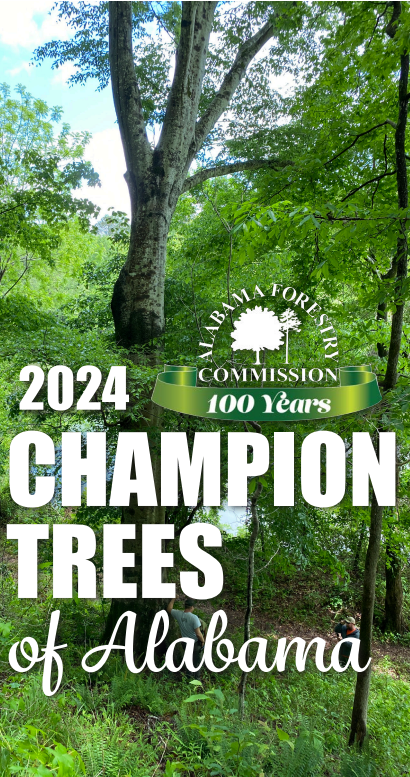
ASH, Green
ELM, Winged
MAGNOLIA, Pyramid
MAPLE, Chalk
OAK, Cherrybark
OAK. Durand
REDCEDAR, Eastern
SILVERBELL, Two-winged
WHS TRAVELS
The WHS’s recent trip allowed our group to visit some of the most iconic landmarks, which honor the legacy of America’s Founding Fathers and others who shaped our country with their remarkable vision, leadership, and sacrifices.
The WHS’s trip – Stepping Back into the Gilded Age: Newport, Rhode Island. Newport is famous for its opulent mansions and coastal charm, and our recent trip took us right into the heart of the Gilded Age. L to R (top row) John Brown House, (middle) State Capital, Clouds Hill, Lippitt House, (bottom row) John Brown House, State Capital, and Clouds Hill.
Wilcox Historical Society
P O Box 464
Camden, AL 36726
 Wilcox Historical Society
Leave a comment